
Last updated: August 2026
Budapest is split down the middle by the Danube River — hilly, historic Buda on one side, flat, buzzing Pest on the other — and that split is the first thing that trips up first-time visitors trying to book a hotel. The short answer: if this is your first trip, stay in Pest, specifically District V or District VI. Both put you within walking distance of the main sights, the metro, and enough restaurants that you’ll never need a taxi. But “stay in Pest” isn’t the whole story, and which pocket of Pest (or whether Buda makes sense for you) depends on what kind of trip you’re planning. Here’s a breakdown of Budapest’s most visitor-friendly neighborhoods, who each one actually suits, and a few things worth knowing before you book.
Budapest Neighborhoods at a Glance
| District | Vibe | Best For | Price Level |
|---|---|---|---|
| V – Belváros-Lipótváros | Central, polished, tourist-friendly | First-timers, short trips | $$$ |
| VI – Terézváros | Elegant, residential-but-central | Quiet luxury, couples | $$ – $$$ |
| VII – Erzsébetváros (Jewish Quarter) | Loud, artsy, nightlife-driven | Younger travelers, nightlife | $$ |
| I – Castle Hill | Historic, scenic, quiet | Views, romance, slower pace | $$$ |
| VIII – Józsefváros (Palace District) | Up-and-coming, mixed | Budget travelers, longer stays | $ |
District V – Belváros-Lipótváros: The Safest Choice for First-Timers
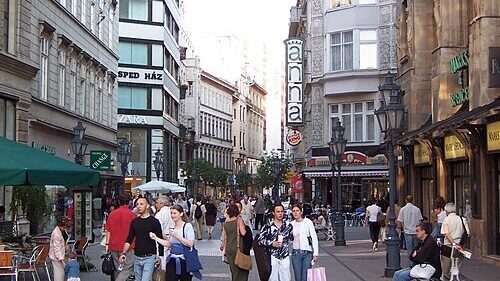
District V, also called Belváros-Lipótváros, is Budapest’s inner city — the flat, walkable core on the Pest side of the Danube. This is where the Parliament building, the Basilica, Váci utca’s shopping strip, and the Chain Bridge crossing all sit within a 15-20 minute walk of each other. If you don’t want to think too hard about logistics, this is the district that removes the most guesswork: metro lines M1, M2, and M3 all touch this area, and you can walk to most major landmarks instead of relying on transit at all.
Best for: First-time visitors, short 2-4 day trips, anyone who wants to minimize commute time to sightseeing.
Keep in mind: It’s the most tourist-dense and priciest part of the city, and the main pedestrian streets can feel more like a shopping mall than “real” Budapest in peak season.
Where to book:
- Four Seasons Hotel Gresham Palace Budapest — 5-star, riverfront by the Chain Bridge. $480–630/night midweek, $900+ weekends & peak season.
- Hotel Parlament — 4-star, central. $60–80/night midweek, $105–125 weekends.
- Marmara Hotel Budapest — 4-star, best value in the district. $55–85/night midweek, $130–145 weekends.
Rates are an August 2026 snapshot from Agoda/Booking.com listings — they shift by date and season, so treat as a ballpark.
District VI – Terézváros: Elegant and Still Central
One district north of Belváros, Terézváros runs along Andrássy Avenue — Budapest’s grand boulevard, often compared to the Champs-Élysées. It has the same walkability as District V but feels noticeably calmer and more residential, with leafy side streets, café culture, and the Hungarian State Opera House anchoring the neighborhood. You’re still a 10-15 minute walk or one metro stop from the main sights, but you trade a bit of the shopping-strip energy for quieter mornings.
Best for: Travelers who want central convenience without the loudest tourist crowds; a strong pick for couples or anyone staying 4+ nights.
Keep in mind: Slightly fewer budget options than District V — this area skews mid-to-upper range.
One practical note if you’re prone to jet lag on the first night or two: Terézváros’s residential side streets, just off Andrássy, are noticeably calmer than the shopping-strip energy of District V — a small thing, but it makes an early-morning walk feel more like being in the city than sightseeing.
Where to book:
- Mystery Hotel Budapest — 5-star, mystic-themed palace hotel just off Andrássy. $100–120/night midweek, $145–200 weekends.
- Mamaison Hotel Andrassy Budapest — 4-star, directly on Andrássy Avenue. $60–100/night midweek, $140–175 weekends.
- Ibis Budapest Heroes Square — budget-friendly, near Heroes’ Square. $55–75/night midweek, $95–150 weekends.
Same August 2026 snapshot caveat applies — check current rates before booking.
District VII – Erzsébetváros (Jewish Quarter): For Nightlife and Energy
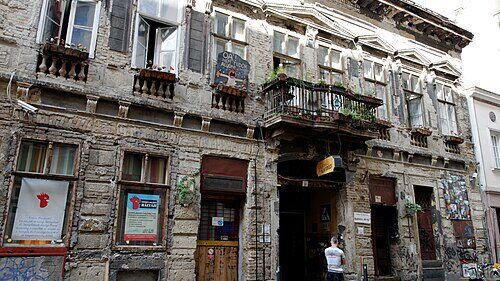
Erzsébetváros — commonly called the Jewish Quarter — is Budapest’s nightlife center, best known for its “ruin bars” (bars built into the courtyards of crumbling pre-war buildings, the most famous being Szimpla Kert). By day it’s full of street art, vintage shops, and some of the city’s best food; by night it gets genuinely loud, especially on weekends and around Kazinczy utca. It borders District VI, so you still get solid walkability to the main sights.
Best for: Travelers prioritizing nightlife, food, and a younger, more energetic base.
Keep in mind: If you’re a light sleeper, book a room off the main bar streets — noise complaints about this district are common and specific to certain blocks. (We go deeper on exactly which streets to avoid in our nightlife-focused neighborhood guide.)
Where to book:
- Hotel Mika Downtown — boutique, right on Kazinczy utca in the ruin-bar zone. $45–100/night midweek, $150–250 weekends & peak dates.
- Wombat’s City Hostel Budapest — social, budget-friendly. Private doubles $45–70 midweek ($100–125 weekends); dorm beds from around $20/night in low season.
August 2026 snapshot — verify current rates before booking.
District I – Castle Hill: Historic Charm on the Buda Side
Castle Hill (Várnegyed) sits across the river on the Buda side, home to Buda Castle, Fisherman’s Bastion, and Matthias Church. It’s the most visually dramatic part of the city — cobblestone streets, panoramic river views, and a genuinely different pace from the Pest side. The tradeoff is convenience: there’s no metro up here, and you’ll be relying on the funicular, buses, or a fair amount of walking (much of it uphill) to reach Pest’s restaurants and nightlife.
Best for: Travelers who want a quieter, more romantic base and don’t mind spending more time in transit; strong option for a second visit rather than a first.
Keep in mind: Fewer restaurant options within the district itself, and it can feel isolated after dark once the castle grounds close to day-trippers.
Where to book:
- Hilton Budapest — built into a former 13th-century church next to Fisherman’s Bastion. $150–185/night midweek, $185–270 weekends.
- Baltázar Boutique Hotel — small boutique, inside the castle walls. $140–160/night, with less weekday/weekend swing than most picks on this list.
True budget options are rare up here, which tracks with the tradeoff described above. August 2026 snapshot — verify current rates before booking.
District VIII – Józsefváros (Palace District): Budget-Friendly but Mixed
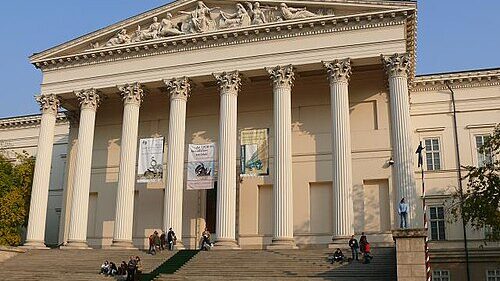
The Palace District has been gentrifying steadily over the past several years — parts of it, especially near the National Museum, are lined with beautifully restored buildings and increasingly popular with budget-conscious travelers and long-stayers. It’s cheaper than Districts V, VI, and VII for comparable room quality, and still walkable to the center. That said, “mixed” is the honest word for it: quality varies block by block, and some pockets further from the museum are less polished.
Best for: Budget travelers, longer stays, digital nomads who want central-adjacent pricing without District V’s price tag.
Keep in mind: Stick to the blocks near the National Museum and Blaha Lujza tér; do a quick look at the exact street before booking anything further out.
Where to book:
- Brody House — bohemian boutique hotel two minutes from the National Museum. $100–130/night midweek, $150–180 weekends.
- Eurostars Palazzo Zichy — restored neo-Baroque palace near Kálvin tér, straightforward value. $50–85/night midweek, $100–140 weekends.
Both back up the “stick near the Museum” advice above. August 2026 snapshot — verify current rates before booking.
Buda or Pest? The Quick Answer
For a first visit, Pest wins for pure convenience — it’s flat, walkable, and holds nearly all the metro lines and most restaurants. Buda (Castle Hill and the surrounding hills) offers better views and a quieter atmosphere, but at the cost of longer transit times to everything else. Most locals will tell you the same thing: stay in Pest for your first trip, and treat Buda as a place to visit during the day rather than a base to sleep in — unless the view and the quiet are worth the tradeoff for you specifically.
Which Neighborhood Fits Your Trip?
- Traveling as a couple? → District VI or Castle Hill for a quieter, more romantic base. (Full breakdown: Best Neighborhood in Budapest for Couples)
- Traveling with kids? → District VI or the quieter edges of District V. (Full breakdown: Best Area to Stay in Budapest with Family)
- Here for nightlife? → District VII, no contest. (Full breakdown: Best Area to Stay in Budapest for Nightlife)
- Want a luxury stay? → District V or VI have the highest concentration of 5-star properties. (Full breakdown: Best Areas to Stay in Budapest for Luxury Travelers)
- Want a boutique hotel specifically? → District VII and Castle Hill both have strong boutique options. (Full breakdown: Best Neighborhoods for Boutique Hotels in Budapest)
- On a tight budget? → District VIII (Józsefváros) for the best value without straying too far from downtown. (Full breakdown: Best Budget-Friendly Area to Stay in Budapest)
Practical Tips for Choosing Where to Stay
- Public transit is genuinely good. The M1 (yellow) line runs directly under Andrássy Avenue, connecting Districts VI and V; trams 4 and 6 loop around the Grand Boulevard and are one of the easiest ways to get a feel for the city on your first day.
- Walking distances are shorter than they look on a map. Districts V, VI, and VII are all adjacent — you can walk between them in 10-20 minutes, so don’t overthink which exact block you’re in if you’re staying in one of these three.
- Book earlier than you’d think. The well-located, well-reviewed mid-range places in Districts V and VI tend to sell out weeks before the obviously “peak” booking window — by the time prices visibly spike, the best options are often already gone, not just pricier. For May-September travel or anything near the Christmas markets, 2-3 months out is a safer bet than “a few weeks before.”
- If in doubt, prioritize proximity to a metro stop over proximity to a specific landmark. You’ll use the metro more than you expect, even in a walkable city like this one.
Frequently Asked Questions
What is the best area to stay in Budapest for first-time visitors?
For most first-time visitors, District V (Belváros-Lipótváros) or District VI (Terézváros) are the safest bets — both are central, walkable, and close to major sights without requiring much reliance on public transit.
Is it better to stay in Buda or Pest?
Pest, for almost everyone on a first visit. It’s flatter, more walkable, and holds nearly all the metro lines. Buda’s Castle Hill is worth visiting but is less practical as a home base due to longer transit times.
Where should first-time visitors avoid staying in Budapest?
There’s no unsafe district in central Budapest, but areas further from Districts V-VIII (especially far into the outer districts) require more transit time and offer less within walking distance — generally not worth it for a short first trip.
How many days should I spend in Budapest?
Three to four days is enough to cover the major sights, a thermal bath visit, and one or two neighborhood explorations without feeling rushed. Add a day if you plan on a day trip outside the city.
Final Thoughts
If you take nothing else from this guide: District V or VI will not lead you wrong on a first trip to Budapest. Once you’ve got a feel for the city, the other neighborhoods — the Jewish Quarter’s energy, Castle Hill’s quiet, Józsefváros’s value — are worth exploring on your next visit, or even as a base if your priorities (nightlife, budget, romance) point you there from the start. We’ve broken each of those down in more detail in the linked guides above if you want to dig deeper into a specific angle.